Over 70 attendees participate in the Ashland Mill Community Open House on December 10, 2025
- Michael Mehaffy
- Dec 10, 2025
- 4 min read
Updated: Dec 13, 2025
Some 60 attendees at the Historic Ashland Armory were joined by ten attendees via Zoom, sharing comments and questions about the plans for the former Croman Mill site

Above: Developer Mike Weinstock of Townmakers welcomes attendees to the meeting.
ASHLAND, DECEMBER 10TH - Attendees at the second Community Open House for the redevelopment of the former Croman Mill site learned about the current proposal, the state of the cleanup process, and the opportunities to meet Ashland's needs for housing, jobs, parks and other amenities within a new walkable mixed-use neighborhood.
The meeting brought together residents, design and planning team members, and civic leaders for a wide-ranging discussion about the future of the former mill site. After brief introductions, the meeting opened with a welcome and remarks from developer Michael Weinstock of Townmakers LLC, who outlined the project team’s goals and emphasized their commitment to a respectful, collaborative process with neighbors and the broader community.
Project planner Michael Mehaffy then presented the current proposal for the Ashland Mill neighborhood—a mixed-use, “live-work-play” community that builds on the 2010 Croman Mill plan while adapting to today’s conditions. He described the site’s timber-mill history and its long-standing need for environmental cleanup, noting that the redevelopment effort provides an opportunity to deliver both remediation and much-needed housing in a location-efficient part of town. The proposal includes a walkable network of greenways, laneways, bike connections, and pedestrian-friendly streetscapes, along with a mix of housing types, adaptable small-business spaces, and community amenities. The goal, he noted, is to create a neighborhood compatible with Ashland’s character, and responsive to equity, sustainability, and resilience priorities.

Above: Planner Michael Mehaffy presents the latest planning concepts.
To allow residents to engage directly with various team members, the meeting shifted into small listening-station discussions, each focused on aspects of the plan such as transportation, employment, housing, and wellness goals. Participants raised detailed questions during these sessions, and team members responded with information about ongoing studies, permitting processes, and areas requiring further evaluation.
A number of residents expressed concerns about traffic conditions, particularly around Tolman and Mistletoe during school pick-up and drop-off periods. Several attendees asked how evacuation would work in the event of wildfire or other emergencies. Piper von Chamier, speaking on behalf of the planning team, described the phased approach to development and noted that a comprehensive traffic analysis has been completed. She explained that the team is coordinating with the City and regional partners to improve key intersections, lane additions, and school-area movements, as well as exploring an emergency egress/ingress option that would cross the railroad corridor.

Above: Piper von Chamier of Terrain Landscape Architecture reports on comments regarding walking, biking, recreation, and other forms of transportation.
Participants also raised questions about the project’s interface with Bellview Elementary School, including pedestrian routes and the capacity of school facilities to serve new households. Participants noted that there have been discussions by school board members about consolidating some schools, and strong support was expressed for keeping Bellview Elementary open. Team members acknowledged these issues and noted that the team will continue working with the school district to understand enrollment dynamics, transportation logistics, and opportunities to improve walking access.
The conversation also touched on the project’s proposed mix of commercial and light-industrial space. Some attendees noted the importance of supporting small and growing businesses. Team members affirmed that additional economic analysis is underway and that the aim is to provide space that serves both current economic patterns and emerging work trends and opportunities.
During the report-back session, each facilitator summarized themes heard at their respective station. Michael Mehaffy reported comments on the importance of architectural compatibility, a diversity of housing choices—including affordable options as only one part of a diverse mix—and continued partnerships with community organizations. Mike Weinstock reported on discussions of the importance of fire resilience planning, and the need for cars to provide emergency egress in a wildfire event. Neal reported comments on the importance of multi-generational living, health-supportive design, and opportunities to address broader social-wellbeing objectives. Piper von Champier noted comments on traffic flow, pedestrian connections, and school-area safety, while Sam reflected residents’ concerns about fire evacuation, commercial uses, and the balance between residential and employment-generating space.
Throughout the evening, the overall tenor of the discussion was constructive and engaged. Participants brought forward thoughtful and often detailed technical questions, and the project team responded with candor about what is known, what remains under study, and how decisions will be made in collaboration with the City and community. While concerns—especially around traffic, fire safety, and the character of future development—were strongly expressed, the dialogue remained respectful and solutions-focused.
Looking ahead, the project team affirmed its commitment to an open and iterative dialogue. Work continues on environmental cleanup planning, traffic and evacuation analysis, coordination with Rogue Valley Transit and the school district, and refinement of the neighborhood plan based on feedback. As more details emerge, the team will publish notes, recordings, and updates on the project website, and will continue to welcome questions and comments.
The Ashland Mill redevelopment is a long-term undertaking -- already with years of work but many more years to come -- and the team emphasized that ongoing collaboration with residents and the City will remain central, in shaping a neighborhood that reflects shared aspirations and community values.
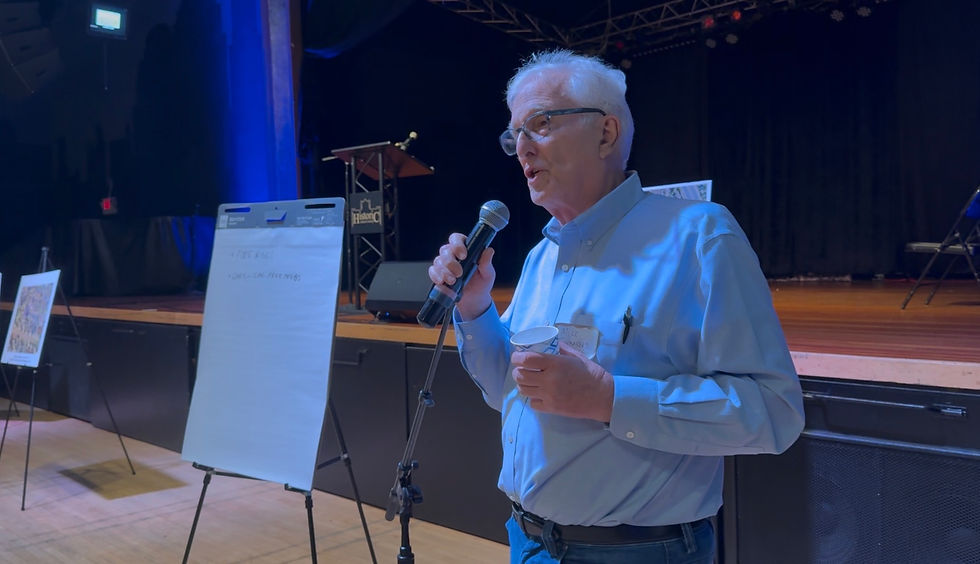
Above: Mike Weinstock of Townmakers LLC reports comments from his group.

Above: Neal Collins of Latitude Regenerative Real Estate reports back on comments from his listening station.

Above: Sam Bickel of Terrain Landscape Architecture reports on the comments from the online Zoom attendees.

Above: Mike Weinstock facilitates one of the breakout group discussions.

Above: Piper von Chamier facilitates a breakout group discussion.

Above and below: Some of the comments recorded during the breakouts.


.

Above: Planner Michael Mehaffy from Structura Naturalis invites final comments and conclusions from the attendees.

Looking forward to this development having 25% of the buildings being affordable ! It will do so much for this community and glad the city of Ashland had an ordinance to ensure inclusivity on this project. Thanks Townmakers!